
- OUR MACHINES
- Manual Shrink Wrapping Machines
- Semi-Automatic Shrink Wrapping Machines
- Fully Automatic Shrink Wrapping Machines
- Fully Automatic Side Seal Machines
- High Speed Fully Automatic Machines
- Shrink Tunnels
- Bundle (Sleeve Wrapper)
- Mailing Systems
- Carton Sealers / Carton Erectors
- Pallet Wrapping
- Vacuum Machines
- Roller Die Cutters
- Skin Machines
- Flow Wrap Machines
- Form Fill Seal Machines
- High Frequency Sealers
- Verticle Form Fill Sealing Machines
- Filling Machines
- Capping Machines
- Doy Pack Machines
- Over wrapping Machines
- Metal Detector and Check Weigher
- Labelling Machines
- Bagging Systems
- Top Seal Machines
- Seal Stretch Machines
- Blister Machines
- Horizontal Wrapping Systems
- Robotic Systems
- In Feed / Out Feed Conveyors
- PACKAGING FILMS
- Polyethylene
- Polyolefin
- BOPP Film
- Polypropylene
- PVC Films
- Stretch Films
- SECOND HAND MACHINES
- Second Hand Machines
Pallet Wrapping Machines: The Complete Buying Guide for Warehouses and Manufacturers
Picture this: end of shift, the dispatch area is stacked with pallets, two team members are hand-wrapping stretch film around each one, and your truck is waiting. It’s slow, it’s inconsistent, and somewhere in the supply chain, a pallet arrives with load shift damage because the wrap wasn’t applied evenly. Sound familiar?
For most Australian warehouses and manufacturers, pallet wrapping is one of those tasks that sits quietly in the background, never quite fast enough, never quite consistent enough, and always more expensive than it looks. The good news is there’s a straightforward fix, and it doesn’t require a complete overhaul of your operation.
A pallet wrapping machine can transform what is typically a bottleneck into a smooth, reliable, and cost-effective step in your dispatch process. But with so many options on the market, knowing which machine suits your operation takes a bit of digging. This guide covers everything you need to know before making a decision.
Why Pallet Wrapping Matters More Than Most Businesses Realise
Pallet wrapping is one of those tasks that looks simple on the surface. In reality, it has a direct impact on freight damage rates, labour costs, film consumption, and load stability in transit.
When pallet wrapping is done manually, the quality varies from person to person and shift to shift. One operator might apply two rotations at the base; another might apply four. Film tension differs depending on how tired someone is at the end of a long shift. These inconsistencies add up.
Research consistently shows that a properly tensioned, machine-applied wrap uses significantly less film than manual wrapping — often 20 to 30 per cent less — while providing superior load containment. When you factor in the cost of stretch film across a year’s worth of dispatch, the savings on consumables alone can go a long way toward offsetting the cost of a machine.
Then there’s the labour equation. Every minute your team spends hand-wrapping pallets is a minute not spent on higher-value tasks. As wage costs in Australia continue to climb, businesses are looking hard at where labour hours are being absorbed by repetitive, automatable tasks.
Types of Pallet Wrapping Machines
Not all pallet wrappers are the same, and the right machine depends entirely on your throughput, floor space, budget, and workflow. Here’s how the main categories break down.
Turntable Pallet Wrappers
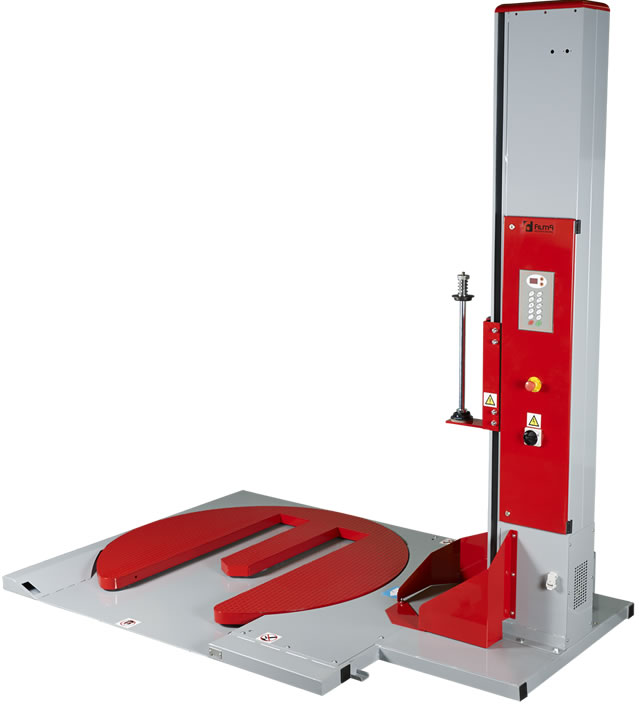
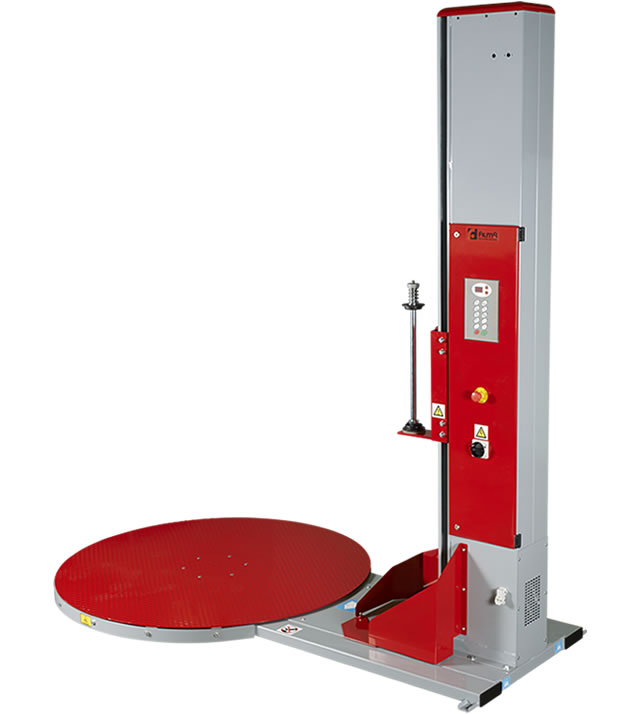
The most common type in Australian warehouses. The pallet sits on a rotating turntable while a film carriage travels up and down a mast, applying wrap in a consistent, overlapping pattern. These machines are well suited to operations with moderate pallet throughput — typically anywhere from 15 to 60 pallets per shift.
Turntable machines come in a range of configurations, from basic semi-automatic units that require an operator to attach and cut the film, through to fully automatic models that handle the entire cycle independently. Semi-automatic is the most popular entry point for small to medium businesses stepping away from manual wrapping for the first time.
Rotary Arm Pallet Wrappers
Here the pallet stays stationary while a rotating arm carries the film around it. This design is better suited to heavy, unstable, or unusually shaped loads that might shift or topple on a moving turntable. It’s also the preferred option where forklift access needs to remain unobstructed during wrapping.
Rotary arm machines tend to sit at a higher price point than turntable equivalents, but for operations dealing with awkward or top-heavy loads, they’re often worth the investment.
Automatic Pallet Wrappers
For higher-volume operations, a fully automatic pallet wrapping machine removes operator involvement from the wrapping cycle almost entirely. The operator positions the pallet, initiates the cycle, and the machine handles everything — pre-stretch, wrap pattern, film cut and wipe. Some models integrate directly into conveyor systems as part of an end-of-line packaging solution, allowing pallets to pass through the wrapping station with no manual handling at all.
If your operation is dispatching 80 or more pallets per shift, or if you’re looking to reduce headcount in your packing area, automatic pallet wrapping is worth serious consideration.
Robot Pallet Wrappers
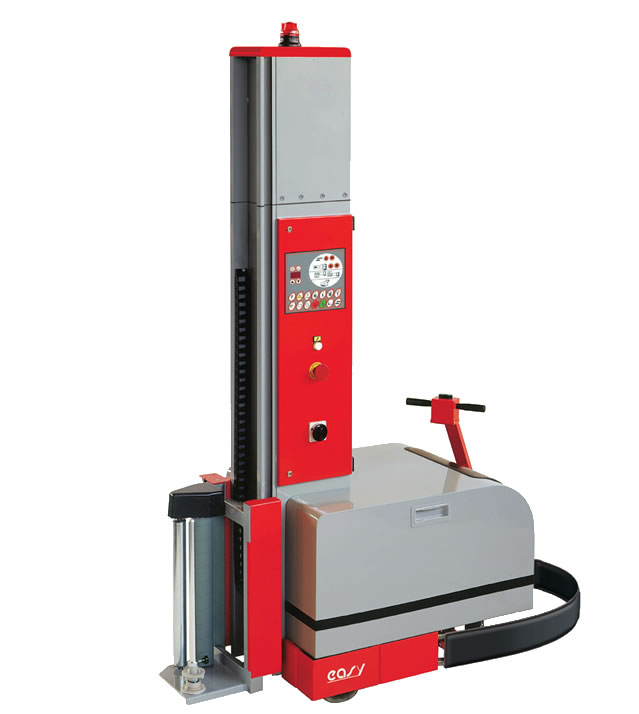
A robotic pallet wrapper uses a mobile robotic arm to apply stretch film, rather than a fixed machine. The robot moves around the pallet rather than the pallet rotating. This is particularly useful where floor space is at a premium, where pallets are too large or heavy for a turntable, or where flexibility across multiple wrapping stations is needed. Minipack International’s range of robotic systems and palletisers includes options for businesses looking at this more flexible approach to end-of-line automation.
Understanding Pre-Stretch: The Feature That Pays for Itself
Pre-stretch is one of the most important features to understand when evaluating pallet wrappers, and it’s often underexplained in product listings.
Pre-stretch refers to the degree to which the machine stretches the film before applying it to the load. A standard stretch film roll has a break point somewhere around 100 to 150 per cent elongation. A machine with a powered pre-stretch system can extend the film to 200, 250, or even 300 per cent of its original length before it ever touches the pallet.
Why does this matter? Because stretched film is more elastic, it applies more holding force to the load and recovers better around corners and irregular shapes. And because more surface area of film is generated from each metre of roll, you get more wraps per roll. Typically, a machine with 250 per cent pre-stretch will use significantly less film by weight to wrap the same pallet as a machine without pre-stretch — or compared to hand-wrapping where pre-stretch is minimal and inconsistent.
Over a year of high-volume wrapping, the film savings from a good pre-stretch system can be substantial. It’s worth asking every supplier specifically what pre-stretch capability their machines offer, and what that translates to in estimated film consumption reduction for your throughput.
Key Specifications to Compare
When you’re evaluating pallet wrapping machines, the spec sheet can be overwhelming. Here are the numbers that actually matter for day-to-day operations.
Wrapping Cycle Time: How long does the machine take to complete a full wrap cycle? This is usually measured in seconds per pallet. For a semi-automatic turntable machine, typical cycle times sit between 30 and 90 seconds. Fully automatic systems can be significantly faster. Match the machine’s cycle time to your peak dispatch rate — not your average — to make sure the machine won’t become a bottleneck on your busiest days.
Maximum Load Height and Weight: Turntable machines have rated maximum load weights. If you’re regularly wrapping heavy pallets — dense industrial products, building materials, food tins — make sure the turntable’s weight rating comfortably exceeds your typical pallet weights. Load height is equally important; the mast height needs to accommodate your tallest pallets with room to spare.
Film Carriage Height and Overlap: The overlap ratio of each film pass affects both load security and film consumption. Most machines allow the operator to set the overlap percentage, but check whether this is a fixed setting or programmable. Programmable wrap profiles are useful where you’re wrapping different product types with different containment requirements.
Power Requirements: Most semi-automatic pallet wrappers operate on standard single-phase power, which makes them easy to install in most warehouse environments. Larger automatic and rotary arm machines may require three-phase power. Worth confirming before you commit to a machine, particularly in older facilities.
Pallet Wrapping and Stretch Film: Getting the Combination Right
A pallet wrapping machine is only as good as the film you’re putting through it. Using the wrong film with a machine — particularly one with a high pre-stretch system — can lead to film breaks, poor load containment, and frustration.
Machine-grade stretch film is designed to perform consistently at high elongation rates. Hand-wrap film, which is designed for manual application, typically breaks at much lower stretch percentages than a powered pre-stretch system will apply. Putting hand-wrap film through a high-powered machine is a recipe for constant film breakage and wasted consumables.
Minipack International supplies a range of machine-grade stretch wrap films that are matched to the performance specifications of their pallet wrapping equipment. Getting the machine and film combination right from the start saves significant time and frustration during commissioning and ongoing operation.
Manual Wrapping vs Machine Wrapping: The Real Cost Comparison
This is the question most operations managers want answered before they commit to a machine purchase. Is the capital investment actually justified?
Let’s work through a rough example. An operation wrapping 40 pallets per shift, two shifts per day, five days a week, is producing around 400 wrapped pallets per week. If manual wrapping takes an average of four minutes per pallet (a conservative estimate once you factor in walking to the film roll, applying, cutting, tucking), that’s 1,600 minutes — or just over 26 hours — of labour per week dedicated to wrapping alone.
At Australian minimum wage, that’s a meaningful figure. Add the cost of hand-wrap film (which is consumed at a higher rate than machine film), and the cost of occasional freight damage claims from inconsistent wrapping, and the payback period on a mid-range pallet wrapping machine starts to look very short indeed.
Most operations managers find that a semi-automatic turntable pallet wrapper pays back in 12 to 24 months purely on labour and film savings, before accounting for damage reduction. For higher-throughput operations, payback periods can be considerably shorter.
What to Look for in a Supplier
Buying a pallet wrapping machine isn’t a one-off transaction. The relationship with your supplier matters as much as the machine itself, because at some point you’re going to need spare parts, technical support, or advice on a machine that’s behaving unexpectedly.
Look for a supplier who:
- Stocks machines locally in Australia, so delivery and commissioning timescales are realistic
- Carries spare parts for the machines they sell — not just for new models, but for older units too
- Has direct technical support rather than routing every query through an offshore call centre
- Can demonstrate machines in a showroom or provide reference customers you can speak to
- Offers a warranty and understands Australian industrial operating conditions
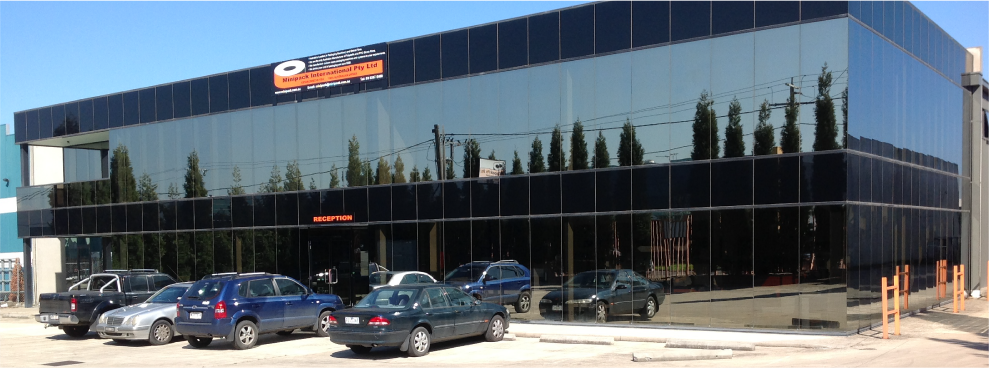
Minipack International operates from its Melbourne headquarters at Campbellfield and has been supplying Australian businesses with packaging machinery for over 40 years. Their pallet wrapper machine range covers everything from manual and semi-automatic turntable units through to fully automatic systems, with technical support and spare parts available locally.
Common Questions Before You Buy
A few things worth clarifying with any supplier before placing an order.
First: what’s included in the price? Some machines are quoted without the film carriage or pre-stretch unit as standard. Confirm exactly what configuration is included, and what optional extras add to the cost.
Second: what’s the lead time? Imported machinery can have lead times of several weeks or longer. If you have a production ramp-up or a seasonal peak coming, factor this into your timeline.
Third: is training included? A machine that the team doesn’t know how to use properly — particularly the programmable wrap profiles and safety features — won’t deliver its full potential. Make sure operator training is part of the handover.
Fourth: what does the warranty cover? Specifically, does it cover parts and labour, or parts only? And is the warranty voided by using third-party film or consumables?
Making the Right Call for Your Operation
Pallet wrapping is one of those areas where the gap between manual and machine operation is large enough that the decision to upgrade almost always pays off. The challenge is choosing the right machine for your specific throughput, load types, floor space, and budget — and partnering with a supplier who can back the machine up with local support over the long term.
If you’re wrapping more than 20 pallets per shift, you’re almost certainly at the point where a semi-automatic pallet wrapper makes financial sense. If you’re wrapping 60 or more, it’s worth looking seriously at fully automatic options that can run with minimal operator involvement.
Minipack International’s team is available to walk you through the options, help you understand what configuration suits your operation, and demonstrate machines in their Melbourne showroom. Getting the right advice before you buy is far easier than trying to fix a mismatch after the machine is installed. Reach out to the team at minipack.com.au to start the conversation.
Frequently Asked Questions on Buying Pallet Wrapping Machines
What is the difference between a semi-automatic and fully automatic pallet wrapper?: A semi-automatic pallet wrapper requires an operator to attach the film to the pallet, start the wrapping cycle, and cut the film at the end. A fully automatic machine handles all of these steps without operator involvement once the pallet is positioned. Fully automatic machines are suited to higher throughput operations where operator time is a significant cost, or where the machine is integrated into a conveyor line.
How much stretch film does a pallet wrapping machine use compared to hand wrapping?: This varies depending on the machine’s pre-stretch capability, but machines with powered pre-stretch systems typically use 20 to 40 per cent less film by weight compared to hand wrapping for the same number of pallets. The film savings are one of the key ways a pallet wrapping machine delivers ongoing return on investment beyond the initial labour savings.
What is pre-stretch on a pallet wrapping machine?: Pre-stretch refers to the degree to which the machine elongates the film before applying it to the pallet. Powered pre-stretch systems can stretch film to 200, 250, or even 300 per cent of its original length. Higher pre-stretch reduces film consumption per pallet and often improves load containment because the stretched film applies greater holding force and recovers well around irregular shapes.
Can pallet wrapping machines handle all pallet sizes?: Most turntable pallet wrappers accommodate standard pallet dimensions — typically 1,200 x 1,000mm and 1,200 x 800mm pallets. Maximum load height varies by machine model, so it’s important to match the machine’s specifications to your tallest pallet configurations. For unusually large or non-standard pallet sizes, a rotary arm machine or robotic wrapper may be more appropriate.
What type of stretch film should I use with a pallet wrapping machine?: Always use machine-grade stretch film that is designed to perform at the elongation rates your machine applies. Hand-wrap film has a lower break threshold and will tear under the tension of a powered pre-stretch system. Using the correct film specification for your machine ensures consistent wrap quality and avoids film breakage during the wrapping cycle.
How long does it take to wrap a pallet with a machine?: A semi-automatic turntable pallet wrapper typically completes a full wrap cycle in 30 to 90 seconds, depending on the number of rotations and the wrap pattern selected. Fully automatic machines can operate faster, particularly when integrated into a conveyor line. Compare cycle times to your peak hourly dispatch rate to confirm the machine won’t create a bottleneck.
Do pallet wrapping machines require special installation or power supply?: Most semi-automatic pallet wrappers operate on standard 240V single-phase power and require no special installation beyond a flat, level surface and access to a power point. Larger automatic machines and rotary arm models may require three-phase power. Confirm the power requirements with your supplier before purchase, particularly in older warehouse facilities where three-phase may not be available at the intended location.
What maintenance does a pallet wrapping machine require?: Routine maintenance for a turntable pallet wrapper is straightforward — typically involving regular cleaning, lubrication of the turntable and mast components, and checking the film carriage rollers and tension system for wear. Most machines come with a maintenance schedule from the manufacturer. Sourcing spare parts locally from an Australian supplier is important for minimising downtime if a component needs replacing.
Is it worth buying a second-hand pallet wrapping machine?: A quality second-hand pallet wrapping machine can represent good value, particularly for smaller operations with limited capital budgets. The key considerations are the machine’s service history, the availability of spare parts for that model, and whether the supplier can provide any warranty or support. Minipack International carries a range of second-hand packaging machines that have been assessed for condition and suitability.