
- OUR MACHINES
- Manual Shrink Wrapping Machines
- Semi-Automatic Shrink Wrapping Machines
- Fully Automatic Shrink Wrapping Machines
- Fully Automatic Side Seal Machines
- High Speed Fully Automatic Machines
- Shrink Tunnels
- Bundle (Sleeve Wrapper)
- Mailing Systems
- Carton Sealers / Carton Erectors
- Pallet Wrapping
- Vacuum Machines
- Roller Die Cutters
- Skin Machines
- Flow Wrap Machines
- Form Fill Seal Machines
- High Frequency Sealers
- Verticle Form Fill Sealing Machines
- Filling Machines
- Capping Machines
- Doy Pack Machines
- Over wrapping Machines
- Metal Detector and Check Weigher
- Labelling Machines
- Bagging Systems
- Top Seal Machines
- Seal Stretch Machines
- Blister Machines
- Horizontal Wrapping Systems
- Robotic Systems
- In Feed / Out Feed Conveyors
- PACKAGING FILMS
- Polyethylene
- Polyolefin
- BOPP Film
- Polypropylene
- PVC Films
- Stretch Films
- SECOND HAND MACHINES
- Second Hand Machines
A Buyer’s Note For End-of-Line Packaging Machinery
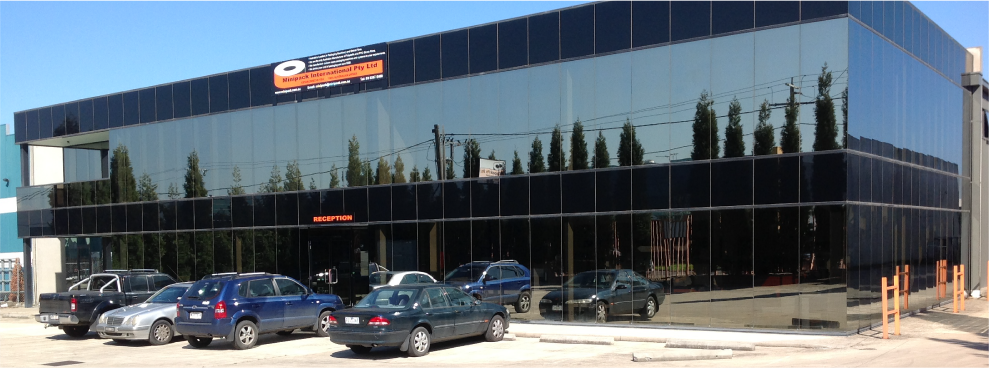
Purchasing packaging machinery for dispatch is as much a layout decision as it is a machine decision, because carton size, film specification, pallet format and the physical gap between stations all determine whether a quoted packs-per-minute figure will still be achievable once the equipment is on the floor. Minipack International supplies that equipment from its showroom at 39-41 Barry Road, Campbellfield, and supports manufacturing, contract packing and distribution sites across Australia. The notes below follow the order in which a packing line actually runs, and they name the machines Minipack lists for each step so that a quotation can be prepared against a real product rather than against a generic category.
Forming and closing the carton
Hand taping is still common on Australian packing benches, and it is slow in a way that shows up both in labour hours and in tape lines that wander off the flap seam. A carton sealer drives the already closed carton through upper and lower taping heads so that the shipper leaves the station square and ready for labelling or palletising. Two models cover most of the enquiries Minipack receives for this station. The MPK 56 is the smaller manual machine, with a published minimum carton of 150 x 180 x 150 mm and a maximum in the region of 500 x 600 mm, four drive belts, and safety doors available as an option rather than as standard equipment. It is the appropriate specification where the line runs a narrow size band for most of the shift. The self-adjusting MPK-50 is the machine for mixed sizes, because it senses carton height and width rather than requiring a manual reset between codes, and its published coverage runs from roughly 150 x 150 x 140 mm to 500 mm in both width and height, with length not limited in the same way. The Karta Tape 1562 sits in the same category for sites that want a compact taper rather than a full automatic line. The MPK 50A erector is a separate purchase, because it forms the blank, and a sealer should not be asked to do that job.
Flap folding can be left with the operator, or it can be built into an automatic infeed, but automatic folding only works if the carton arrives aligned and square. Where cartons are still being presented from a bench and arrive skewed, the presentation has to be corrected before there is any point in paying for flap closers. Board grade matters in the same way, because overfilled or soft cartons crush between the drive belts and the tape then misses the flap seam. A filled sample of each main size is therefore more useful in a quotation than an empty carton or a rounded written range.
Film on the pack
Minipack’s film machines cover three different duties, and they should not be quoted as if they were interchangeable.
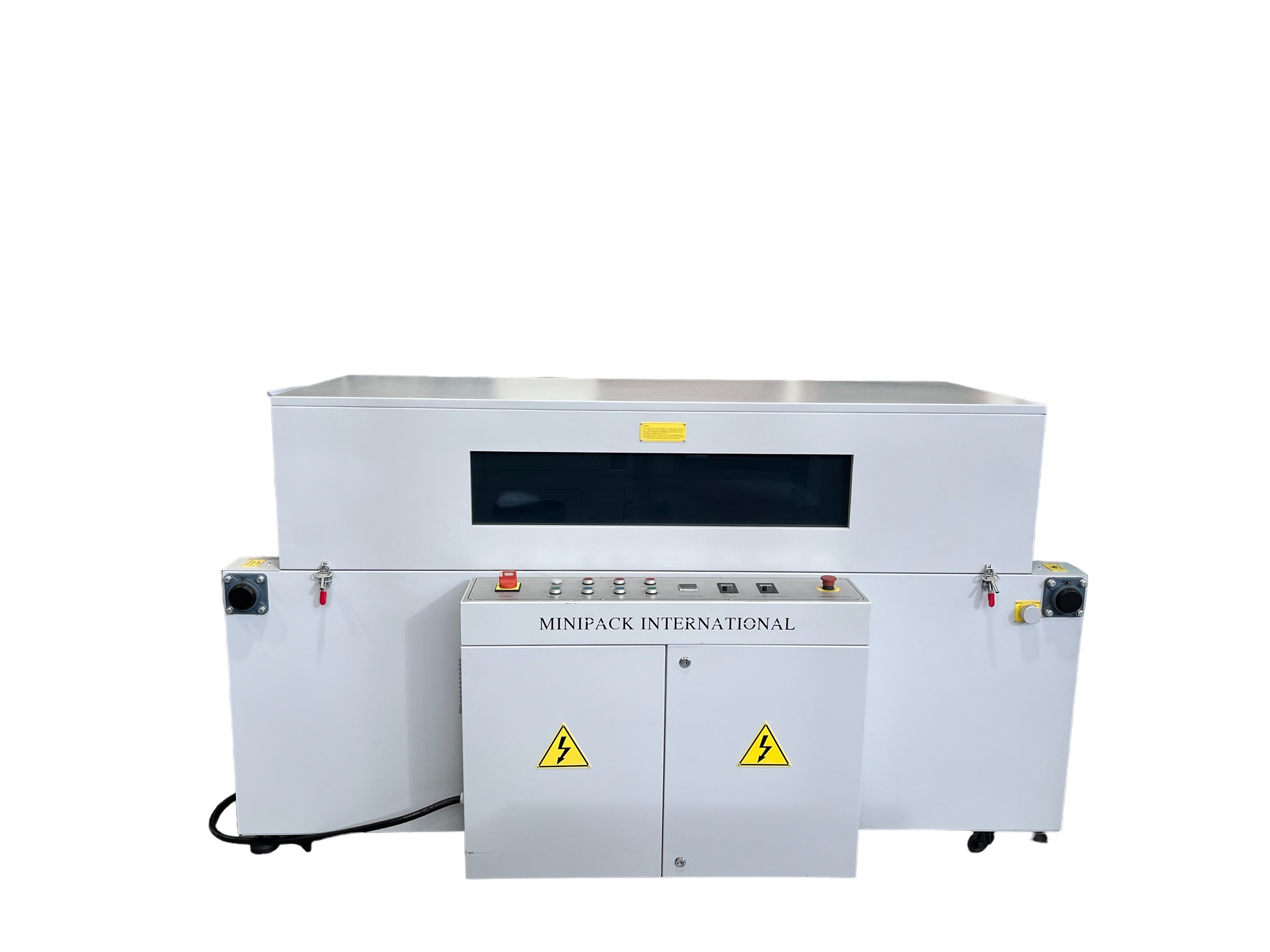
Shrink wrapping uses an L-bar or side-seal machine to make the bag, after which heat in a shrink tunnel pulls the film onto the product. Manual and semi-automatic sealers suit short runs and frequent size changes, while fully automatic shrink lines and side-seal machines suit a steady infeed and longer production runs. Seal-bar length has to clear the pack plus the film, and the tunnel mouth has to clear the tallest pack, including the film before it has shrunk. Those two dimensions reject more quotations than published cycle time does, because a sealer supplied without a matching tunnel, or a tunnel aperture smaller than the product, will not produce a saleable pack.
A bundle or sleeve wrapper bands a group of cartons, trays or cans and leaves the ends of the pack open. That finish is correct for warehouse multipacks that only need to be unitised for distribution, and it is the wrong machine for a retail unit that must be fully enclosed or tamper-evident. A sleeve wrapper should not be accepted as a cheaper substitute for a shrink line, because the finished pack is different and the customer will see the difference.
Horizontal wrapping systems, including spiral wrappers, are used for long or awkward product such as timber-length packs, extrusions and cartons that a conventional arch or L-bar cannot straddle. Film overlap and product cross-section are the figures that matter in the specification, and speed is secondary. This is a containment method, and it does not replace a shrink tunnel.
Film should be ordered with the machine rather than treated as a later consumable decision. Polyolefin is the usual retail shrink film in Minipack’s polyolefin range, PVC remains in use where the application still calls for it, and polyethylene covers heavier bundling and pallet bags. Width has to match the sealer, and gauge has to match product weight and tunnel temperature. Minipack stocks these shrink films, and a machine that is set up on one grade and later run on another will commonly show weak seals and poor shrink. If a retailer or an end customer has already approved a film grade, that grade should be stated on the purchase order.
Building and wrapping the pallet
Palletising and pallet wrapping are separate specifications, and the stack has to be right before the film is applied. Palletising equipment is listed under palletisers and robotic systems, and the compact Cartesian palletiser handles product from 90 x 150 x 100 mm high up to 400 x 600 x 600 mm high, on 800 x 1200 mm or 1000 x 1200 mm pallets, at up to 10 movements a minute. The machine footprint starts at about 2200 mm long by 1350 mm wide, and overall height including the pallet can reach 2700 mm on the taller configuration. The gripper is vacuum and is built to the carton rather than supplied as a generic head, one pallet bay sits on the floor, and light curtains rather than a full cage are the published approach to operator access. The double-station compact model is the next step where the line cannot stop while a full pallet is removed. A robotic arm cell, or the double-sided robotic pallet system, is the specification where several patterns or two infeeds share one cell, and those installations need more floor than the Cartesian compact, including forklift clearance. If that clearance is not on the drawing, the quoted cycle rate is not a useful number. Cartons entering any of these machines also need a consistent height and a sound tape seal, because the pattern cannot compensate for a crushed corner.
Wrapping is then specified as a pallet wrapper together with stretch film, and the machine type follows the stability of the load. A turntable machine spins the load and suits stable pallets with a clear forklift path. A rotating-arm machine, including the MP30 family, leaves the pallet stationary and is used where spinning the load would throw product or where the load is tall and light. Semi-automatic wrappers require an operator to attach and cut the film, while automatic machines do that themselves, which only helps if pallets arrive on a conveyor at a steady rate. The quotation should record pallet size, load height, weight and loads per hour, and it should state the wrap program, including bottom wraps, top wraps and overlap, rather than quoting a pre-stretch percentage on its own. Pre-stretch without a wrap count is how loads leave the dock under-filmed.
Joining the machines
Infeed and outfeed conveyors are part of the machine specification, not an accessory to be added after installation, because the working height of a sealer, a tunnel and a wrapper rarely matches by accident. Minipack can supply the conveyors with the equipment, which is the cleaner option when heights do not already match. Where the site already has rollers, top-of-roller height and product width should be measured before anyone assumes those rollers will bolt on. A stop, or a short accumulation section, is also required so that a stopped wrapper does not jam the sealer behind it. That control prevents a large share of the service calls that otherwise arrive at the end of the week.
Labelling can be included in the same layout where the label face and artwork do not change from order to order. Minipack’s labelling machines are cheaper to place in the first conveyor design than to retrofit six months later, provided the artwork is stable. Where the label position changes with most orders, a hand applicator is the more sensible specification until the carton path itself has settled.
How much automation is justified
There is no general rule that a fully automatic machine is the better purchase. Low volume and hourly size changes favour manual or semi-automatic equipment, because changeover time dominates the shift and an unattended cycle rate is never reached. A steady carton size, together with a crew cost that finance will actually remove from the station, is what justifies automatic equipment. The labour saving should be calculated from the people on the station today, by shift, including the casual rate paid in that state, minus the people who will still be there for film changes, size changes, jam clearance and cleaning. Film and tape invoices, and freight claims that the warehouse will attribute to poor wrap or poor tape, are the other two inputs worth using. On that basis, 12 to 30 months is a normal planning band for this class of packaging machinery in Australia, and a shorter figure needs a documented damage number rather than a percentage copied from a brochure.
Where expected volume may not support a new automatic cell, second hand machines from Campbellfield stock are a reasonable way to prove the process. The same checks on size range, rate and film still apply, because a second hand machine that does not match the carton is not a trial.
What to send with an enquiry
A useful enquiry gives Minipack enough to recommend a model rather than a category. That means the product itself, or dimensions and weight that have been measured, the full carton or collation range from minimum to maximum, peak and current output in packs or pallets per hour, the number of people currently on the station, any film or tape that is already mandated, available power and compressed air, and a floor sketch that shows the door the crate has to pass through. Demonstrations are held at 39-41 Barry Road, Campbellfield, and the product information line is 1300 853 111, with head office on (03) 9357 8400 and the contact page reaching the same team. A published cycle time is not a substitute for running the actual carton.
Carton sealing, film wrapping, palletising and pallet wrapping should be specified as separate jobs, and then joined with conveyors whose height and stop logic have been checked against the layout. Minipack’s published machines, from the MPK 56 and MPK-50 sealers through shrink, sleeve and spiral wrappers to the compact palletiser and MP30-type pallet wrappers, cover that sequence from manual equipment through to fully automatic lines, together with the films those machines are set up to run. A trial on the actual carton at Campbellfield is the sensible step before the order is placed.
Frequently Asked Questions
What is the MPK 56 used for? The MPK 56 is a manual top-and-bottom carton sealer for lighter cartons in a limited size band, from 150 x 180 x 150 mm up to about 500 x 600 mm, and it is the usual specification where one or two carton sizes dominate the shift.
What is the MPK-50 used for? The self-adjusting MPK-50 is used where carton height and width change through the day, within a published window up to about 500 mm wide and 500 mm high, so that the operator does not have to reset the machine between codes.
Is a sleeve wrapper the same as a shrink wrapper? A sleeve or bundle wrapper is not the same machine, because it bands a collation and leaves the ends open, which suits distribution multipacks, whereas shrink wrapping machines and tunnel enclose the pack and are used where presentation or tamper evidence is required.
Which pallet wrapper does not spin the load? A rotating-arm wrapper leaves the pallet stationary, and the MP30 family is in that group, used for tall, light or unstable loads that should not be rotated.
What rate and product size is the compact palletiser quoted at? The compact Cartesian palletiser is quoted at up to 10 movements a minute, on product from 90 x 150 x 100 mm high to 400 x 600 x 600 mm high, on 800 x 1200 mm or 1000 x 1200 mm pallets, subject to the gripper and the pattern.
How much floor space does that palletiser need? The footprint starts at about 2200 mm long by 1350 mm wide, and overall height including the pallet can reach 2700 mm, so the quoted configuration should be checked against the bay before an order is placed.
Should film be purchased with the machine? Film should be purchased with the machine, because width, gauge and film type, whether polyolefin, PVC or polyethylene, need to match the sealer and the tunnel, and Minipack supplies those films so that the machine is not later run on a grade it was not set up for.
What should a payback calculation be based on? It should be based on the site’s own wage rates, current film or tape invoices, and freight claims that can be tied to packaging. A planning range of 12 to 30 months is normal unless a documented damage saving supports a shorter period.
Can existing conveyors be reused? They can, if top-of-roller height, product width and speed match the new machine. If the outfeed has nowhere for product to go when the next station stops, accumulation or a controlled stop should be included before the machine is ordered.
How is a demonstration arranged? Call 1300 853 111 or use the contact page, and bring the carton and any film that must be used to the showroom at 39-41 Barry Road, Campbellfield, Victoria 3061.