
- OUR MACHINES
- Manual Shrink Wrapping Machines
- Semi-Automatic Shrink Wrapping Machines
- Fully Automatic Shrink Wrapping Machines
- Fully Automatic Side Seal Machines
- High Speed Fully Automatic Machines
- Shrink Tunnels
- Bundle (Sleeve Wrapper)
- Mailing Systems
- Carton Sealers / Carton Erectors
- Pallet Wrapping
- Vacuum Machines
- Roller Die Cutters
- Skin Machines
- Flow Wrap Machines
- Form Fill Seal Machines
- High Frequency Sealers
- Verticle Form Fill Sealing Machines
- Filling Machines
- Capping Machines
- Doy Pack Machines
- Over wrapping Machines
- Metal Detector and Check Weigher
- Labelling Machines
- Bagging Systems
- Top Seal Machines
- Seal Stretch Machines
- Blister Machines
- Horizontal Wrapping Systems
- Robotic Systems
- In Feed / Out Feed Conveyors
- PACKAGING FILMS
- Polyethylene
- Polyolefin
- BOPP Film
- Polypropylene
- PVC Films
- Stretch Films
- SECOND HAND MACHINES
- Second Hand Machines
Carton Sealer Machines: How to Stop Manual Taping Slowing Your Dispatch
A carton can look perfectly sealed on the packing bench and still fail halfway to Perth. You find out the hard way: a retailer sends photos of a popped top flap, product spilled across a pallet, and a damage claim sitting in your inbox. Meanwhile, back on the floor, two people are still chasing boxes with tape guns, stopping every few minutes to reload a roll, and the next pick wave is already stacking up behind them.
That scene is common in Australian warehouses and manufacturing plants. Carton forming gets the attention because it looks busy. Carton sealing is the quiet bottleneck. If your team is still closing every box by hand, you are paying for it in labour, tape waste, inconsistent seals and freight claims. The fix is not more overtime. It is matching the right carton sealer machines to the way your line actually runs.
This guide is for operations managers, warehouse managers and procurement teams who need to decide when to stop taping by hand, which sealer type to buy, and how that machine should sit next to an erector, conveyor and pallet wrapper. It is not a carton erector labour piece. Erectors form empty boxes. Sealers close filled ones. Mixing those two jobs up is how plants buy the wrong machine.
What a carton sealer actually does on the line
A carton sealer applies tape (or, on some models, gummed paper tape) to the top, the bottom, or both, after the carton has been packed. The box is driven through by side belts, top and bottom belts, or a combination of both. Flaps are either folded by the operator or closed automatically, depending on the machine. The carton leaves the unit sealed, squared and ready for labelling, palletising or stretch wrapping.
That sounds simple. The operational difference is large. A competent packer with a tape gun might close 6 to 10 cartons a minute on a good run, and far fewer when cartons vary in size or the tape roll ends mid-seal. A semi-automatic or automatic carton sealer holds a steady rate, uses a consistent tape length, and does not get tired at 3pm on a Friday dispatch.
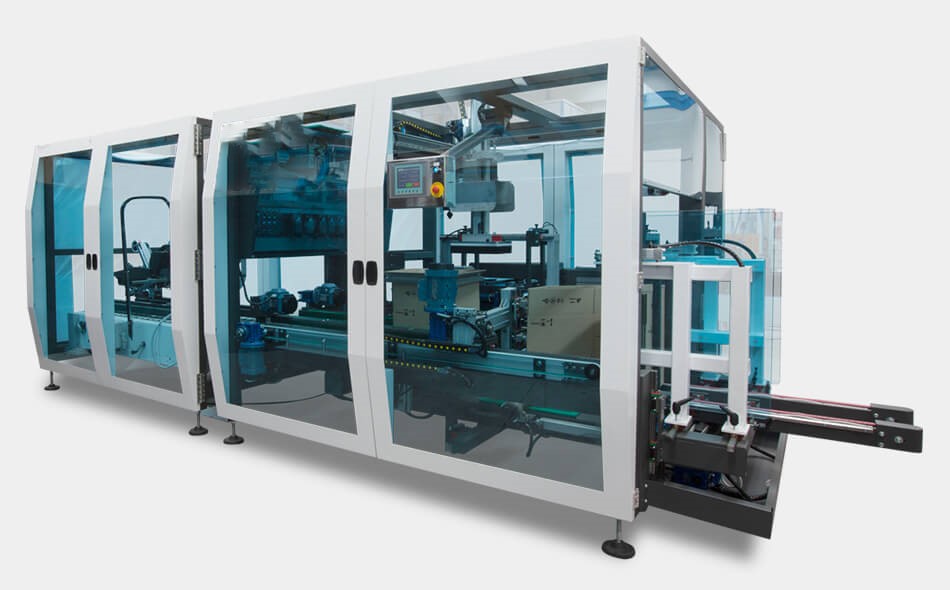
Minipack’s range of Carton Sealers / Carton Erectors covers that whole stretch of the line: flap folders, fixed-size sealers, self-adjusting random sealers, erectors, and complete automatic lines. The category exists because sealing and erecting are related, but they are not the same purchase.
Sealer versus erector, in one sentence each
A carton erector takes a flat blank, squares it, and seals the base so someone (or a packer) can fill it. A carton sealer takes a filled carton and closes the remaining flaps. If your people spend the morning folding empty boxes, you have an erecting problem. If packed cartons sit open waiting for tape, you have a sealing problem. Plenty of sites have both. Buy for the bottleneck you can see on the floor this week, not the one you might have in two years.
Signs manual taping is already costing you
You do not need a time-and-motion study to know the packing bench is struggling. Watch a normal afternoon, not a quiet Tuesday morning.
Cartons leave the bench looking sealed and arrive looking tired
Hand taping is uneven. One operator runs a tight H-seal. The next runs a single strip that barely catches the minor flaps. Overfilled e-commerce cartons bulge, so the tape sits on a curve and peels in the trailer. Underfilled cartons crush, and the seal has nothing solid to hold. A machine applies the same pressure and the same tape path every time. That consistency is what freight companies quietly rely on, even if they never say it on the consignment note.
Tape guns are doing more walking than sealing
Count how often someone leaves the station for a new roll, a better gun, or a carton that needs re-taping. Then count how many cartons wait while that happens. On a food plant packing mixed SKUs into 400mm cartons, we regularly see two people dedicated to closing boxes that a single sealer would clear without fuss. Those two people are not “cheap labour”. They are a recurring cost that rises every EBA round.
Carton sizes keep changing and nobody wants to reset anything
Fixed-size sealers are excellent when you run one or two carton footprints all day. They are frustrating when you ship a 200mm mailer next to a 500mm shipper. Operators then bypass the machine and go back to the tape gun, which defeats the purchase. If your order mix is random, you need a random or self-adjusting sealer, not a cheaper fixed machine you will ignore.
Dispatch overtime is the unofficial packing plan
If the last hour of the shift is always a scramble to close boxes for a 5pm cutoff, sealing is the constraint. Adding another casual for peak season treats the symptom. A sealer treats the rate. Once cartons move through at a known metres-per-minute, you can plan labour around picks and pallet wrapping instead of around who has a working tape gun.
Which type of carton sealer matches your volume
Start with carton mix and daily volume, not with a brochure. Three questions decide 80% of the specification: How many cartons leave the building on a normal day? How many different footprints sit in that mix? Do operators fold the flaps, or do you want the machine to do that as well?
Semi-automatic, fixed-size sealers
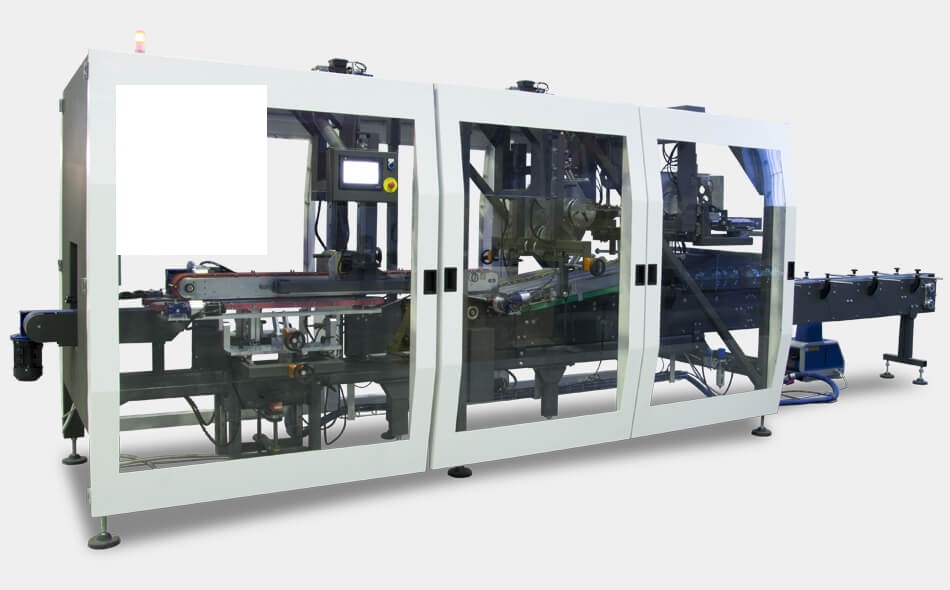
The operator folds the flaps, pushes the carton in, and the machine tapes top and bottom as belts drive it through. This is the workhorse for plants with a stable carton size and moderate volume. Minipack’s Carton Sealer: MPK 56 is in this camp: four drive belts, top and bottom sealing, suited to lighter and narrower cartons. Maximum carton size is unlimited length by 500mm wide by 600mm high, with a minimum around 150 × 180 × 150mm. Safety doors are an optional extra, which matters if the unit sits on an open packing floor rather than behind a guard line.
Use this style when one or two carton sizes dominate the day and a packer is already standing at the end of the bench. You remove the slowest, most variable part of their job (the tape) without asking them to learn a fully automatic cell.
Self-adjusting and random sealers
These machines read carton height and width and set themselves. No cranking side guides between every order. That is the difference between a sealer people use and a sealer that becomes a very expensive stand.
The Carton Sealer: Self Adjusting MPK-50 automatically adjusts height and width, which is why it is specified for food, pharmaceutical, toy, electronics and similar plants that change carton specs through the shift. It handles cartons from 150 × 150 × 140mm up to 500mm wide and 500mm high, with length effectively unlimited. If your warehouse ships mixed e-commerce orders, this is usually the first machine worth quoting.
For sites chasing plastic-free sealing, the Carton Sealer: Karta Tape 1562 is a random case sealer that applies water-activated paper tape with a plant-based adhesive. It detects carton size, cuts the tape to length, and runs at up to 30 metres per minute. The paper tape fibres into the board, which makes tampering obvious and gives a stronger stack for warehouse racking. If a customer or a retailer scorecard is pushing you off plastic carton tape, this is the practical answer rather than a marketing one.
Automatic flap closing and complete lines
Once volume is high enough that even folding flaps is a delay, you want automatic flap closing and a driven infeed. Minipack’s Carton Sealer: Complete Line uses top and side belt drive, automatic flap closing, and two taping heads that apply a strip above and below the box at the same time. Tape loading is designed to be quick, because a jammed head at 2pm is how a “fully automatic” line becomes a queue.
At that point you are no longer buying a sealer. You are buying a station that has to talk to In Feed / Out Feed Conveyors on both sides. If cartons arrive skewed, the sealer will tape them skewed. If they leave with no accumulation, they will crash into the palletiser. Spec the conveyor with the sealer, not as an afterthought.
How carton sealers sit in a real Australian end-of-line
A typical mid-size food or FMCG line in Melbourne or Western Sydney looks like this: product is packed into a formed carton, the carton is sealed, a label goes on, cartons accumulate, a pallet is built, then the pallet is stretch wrapped for the truck. If any one of those steps is manual while the others are paced, inventory piles up in the wrong place.
Start at sealing if packed cartons are waiting. Add a Carton Erector: MPK 50A if people are still folding blanks before they can pack. Then look downstream. A neat, square, consistently sealed carton palletises better and stretch wraps better. That is why sealing quality shows up later as fewer crushed corners and fewer “just wrap it again” moments at the Pallet Wrapping station.
Do not skip labelling. A sealer that outruns your print-and-apply creates a new bottleneck two metres later. Minipack also supplies Labelling Machines that can sit immediately after the tape heads. The commercial point is simple: buy the sealer as part of the path from packed product to a stable pallet, not as an isolated gadget.
A practical way to cost the upgrade
Forget vague “efficiency” language. Use numbers your finance manager will recognise.
Take a warehouse closing 800 cartons a day. Two people spend roughly four hours each on taping and re-taping. That is eight labour hours. At a fully loaded cost of $45 an hour, you are spending about $360 a day, or around $90,000 a year, just to close boxes. A semi-automatic sealer typically leaves one person in place to fold flaps and feed the machine, and cuts the taping time dramatically. Even a conservative saving of four hours a day is $45,000 a year before you count overtime, labour hire in December, and tape that currently gets double-wrapped “to be safe”.
Then add freight. One serious damage claim on a mixed pallet of retail-ready cartons can wipe out a month of tape savings. Uniform top-and-bottom seals reduce those claims. They also reduce the unofficial quality control job of walking the dispatch dock and shaking boxes to see which ones are loose.
Tape consumption itself usually drops. Operators compensate for weak seals by adding extra strips. A sealer uses a set length. On random sealers, that length follows the carton. Over a year, the difference is visible on the consumables invoice, not just on the packing bench.
Payback for a straightforward sealer is often measured in months, not years, once daily carton count is in the hundreds. Fully automatic lines take longer and need a honest look at carton mix, because a line that stops for every size change will not hit the rate on the quote. That is a specification problem, not a reason to stay on tape guns.
What to measure before you request a quote
Bring real data to the conversation. Minipack can size a machine from a phone photo, but a clean brief gets you a machine that works on day one.
- Carton length, width and height for every footprint you run, including the awkward ones you only ship on Thursdays.
- Board grade and whether cartons arrive overfilled, underfilled or both.
- Average and peak cartons per hour, not just cartons per day. Peak is what jams the dock.
- How often the size changes in a shift, and who currently adjusts the guides.
- Whether you need top only, bottom only, or top and bottom tape.
- Plastic carton tape versus paper gummed tape, including any retailer or sustainability requirement.
- Available floor length, power, and whether a conveyor already exists on either side.
- Who will clear tape jams at 6am when the regular operator is not in.
If you cannot answer the size-change question, you are not ready for a fixed sealer. If you cannot answer peak rate, you will under-spec the belts and wonder why cartons scuff. Write it down before you call.
Common mistakes that waste the investment
Buying on carton length alone. Width and height set the side belts and the taping head stroke. A machine that “takes 600mm cartons” may still reject your 180mm-high mailer.
Ignoring flap quality. Crushed or poorly folded flaps make even a good sealer look average. If blanks are being formed by hand and coming out diamond-shaped, fix erecting first or at the same time.
Parking the sealer off the line. If operators have to carry cartons to the machine, they will not. Place it where the packed carton already travels.
Skipping spare tape heads and belts. A sealer is only as reliable as the consumable path. Keep a spare head and a known tape spec. Cheap tape that telescopes off the roll will make a $20,000 machine look broken.
Treating sealing as the last automation you will ever need. Once the sealer keeps up, the next queue appears at pallet wrapping or palletising. That is success. Plan the next station instead of being surprised by it. Robotic palletising sits in Minipack’s Robotic Systems range when you get there.
Where Minipack fits if you are ready to specify
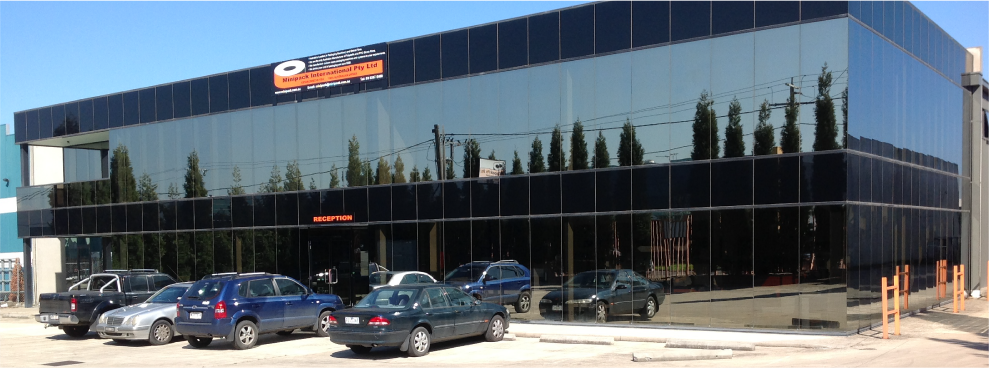
Minipack International has been supplying packaging machinery from Campbellfield, Victoria since 1984, with national coverage from Melbourne through Sydney, Brisbane, Perth and Adelaide. The carton range is not a sideline. It sits beside shrink wrapping, pallet wrapping, conveyors and film, which matters when you want one supplier who can see the whole end of line rather than a sealer that does not match the next machine.
For most sites, the first commercial step is a semi-automatic or self-adjusting sealer matched to your carton window. High-volume plants with stable sizes move to automatic flap closing. Operations under pressure to drop plastic tape look at the Karta paper-tape random sealer. If forming empty boxes is still eating labour, pair the sealer with an erector rather than asking one machine to do both jobs poorly.
The commercial takeaway is blunt. If packed cartons are waiting for tape, you are already paying for a sealer. You are just paying it through wages, claims and overtime instead of through a machine that closes boxes the same way every time. Get the carton sizes, the peak rate and the tape type on paper, then contact us on 1300 853 111 or (03) 9357 8400 and have the line quoted properly. Visiting the Campbellfield showroom is still the fastest way to see whether a fixed MPK 56, a self-adjusting MPK-50, or a complete automatic line is the one your dispatch actually needs.
Manual taping hides in plain sight. It looks like “just packing” until you count the hours, the extra tape and the cartons that fail in transit. Carton sealer machines take that variable, tiring job and turn it into a set rate with a set seal. Choose fixed-size equipment when your footprint barely changes. Choose self-adjusting or random sealers when the mix is messy. Add automatic flap closing when volume outruns the person folding lids. Keep erectors in their lane: they make empty boxes, they do not close full ones.
Do the measurement work first. Then specify a machine that will still be used in six months, not one that gets walked around. That is how sealing stops being the quiet bottleneck and starts being a boring, reliable part of dispatch, which is exactly what you want it to be.
Questions about buying a carton sealer machine
What are carton sealer machines used for?
They close filled cartons by applying tape to the top, bottom, or both as the box is driven through the machine. The result is a consistent seal at a steady rate, ready for labelling, palletising or stretch wrapping.
How is a carton sealer different from a carton erector?
An erector forms a flat blank into an empty box and usually seals the base. A sealer closes a carton that has already been packed. Many plants need both, but they solve different bottlenecks.
When should a warehouse upgrade from tape guns?
When two or more people spend a large part of the shift closing boxes, when seals fail in transit, when carton sizes change often enough that taping quality varies, or when dispatch overtime is routine. Hundreds of cartons a day is usually enough volume to justify a sealer.
Do I need a random (self-adjusting) sealer or a fixed-size machine?
Use a fixed-size sealer if one or two carton footprints dominate the day. Use a self-adjusting or random sealer if operators currently skip the machine because changing guides takes too long. Mixed e-commerce and multi-SKU food packing almost always need random adjustment.
Can carton sealers handle different box sizes?
Yes. Fixed machines are set to a size range and adjusted between runs. Self-adjusting models such as the MPK-50 change height and width automatically. Always check your smallest and largest cartons against the published min and max, including height, not just length.
What throughput can I expect?
It depends on carton length, belt speed and whether flaps are folded by hand. Semi-automatic units are limited by the operator. Automatic flap-closing lines and random sealers such as the Karta Tape 1562 (up to 30 metres of tape per minute) hold a much steadier rate. Quote on peak cartons per hour, not a daily average.
Is paper tape a realistic alternative to plastic carton tape?
Yes, if the machine is built for it. Water-activated gummed paper tape bonds into the board, which improves tamper evidence and stacking strength. The Karta Tape 1562 is designed for that job. Do not assume a standard plastic-tape head can simply swap rolls.
How long does a carton sealer take to pay back?
For sites taping hundreds of cartons a day, labour savings alone often cover a semi-automatic or self-adjusting sealer within a year, sometimes much faster. Include overtime, labour hire, tape waste and freight claims in the sum, not wages only.
Can a carton sealer sit in an existing packaging line?
Yes. Most installations go between the packing bench and labelling or palletising, with infeed and outfeed conveyors to keep cartons square. Tell the supplier what sits either side, or you will solve sealing and create a jam at the next station.
Who should I talk to about specifying a machine in Australia?
Minipack International in Campbellfield, Victoria supplies carton sealers, erectors and complete lines nationally. Call 1300 853 111 or (03) 9357 8400, or use the contact page, with your carton sizes, peak rate and tape type ready.