
- OUR MACHINES
- Manual Shrink Wrapping Machines
- Semi-Automatic Shrink Wrapping Machines
- Fully Automatic Shrink Wrapping Machines
- Fully Automatic Side Seal Machines
- High Speed Fully Automatic Machines
- Shrink Tunnels
- Bundle (Sleeve Wrapper)
- Mailing Systems
- Carton Sealers / Carton Erectors
- Pallet Wrapping
- Vacuum Machines
- Roller Die Cutters
- Skin Machines
- Flow Wrap Machines
- Form Fill Seal Machines
- High Frequency Sealers
- Verticle Form Fill Sealing Machines
- Filling Machines
- Capping Machines
- Doy Pack Machines
- Over wrapping Machines
- Metal Detector and Check Weigher
- Labelling Machines
- Bagging Systems
- Top Seal Machines
- Seal Stretch Machines
- Blister Machines
- Horizontal Wrapping Systems
- Robotic Systems
- In Feed / Out Feed Conveyors
- PACKAGING FILMS
- Polyethylene
- Polyolefin
- BOPP Film
- Polypropylene
- PVC Films
- Stretch Films
- SECOND HAND MACHINES
- Second Hand Machines
How Switching to a Full Automated Packaging Line Improves Efficiency for Your Business
If you’re a company owner, there’s nothing more important than increasing revenue and minimising costs. Whether you’re looking to boost sales or increase scalability, automated packaging systems can help streamline your business for even greater success. This article will take a look at how this innovative technology can improve the overall efficiency for your business and why it’s a good investment.
Package Your Products More Efficiently
Keeping up with demand is one of the biggest benefits of automated packaging systems. Whether it’s small or large-scale manufacturing, improving scalability will not only help lower your product cost per unit, it maximises efficiency, reduces labour costs and produces more product with less output.
If you’re experiencing stronger demand for your goods or alternatively, looking to scale down supply due to lack of sales, package automation is also beneficial for keeping things on track – saving you money in both the short and long term. As a company owner, the ability to produce the exact amount of product you need is essential for improved efficiency and cost-effective operations.
Helps Cut Down on Labour Costs
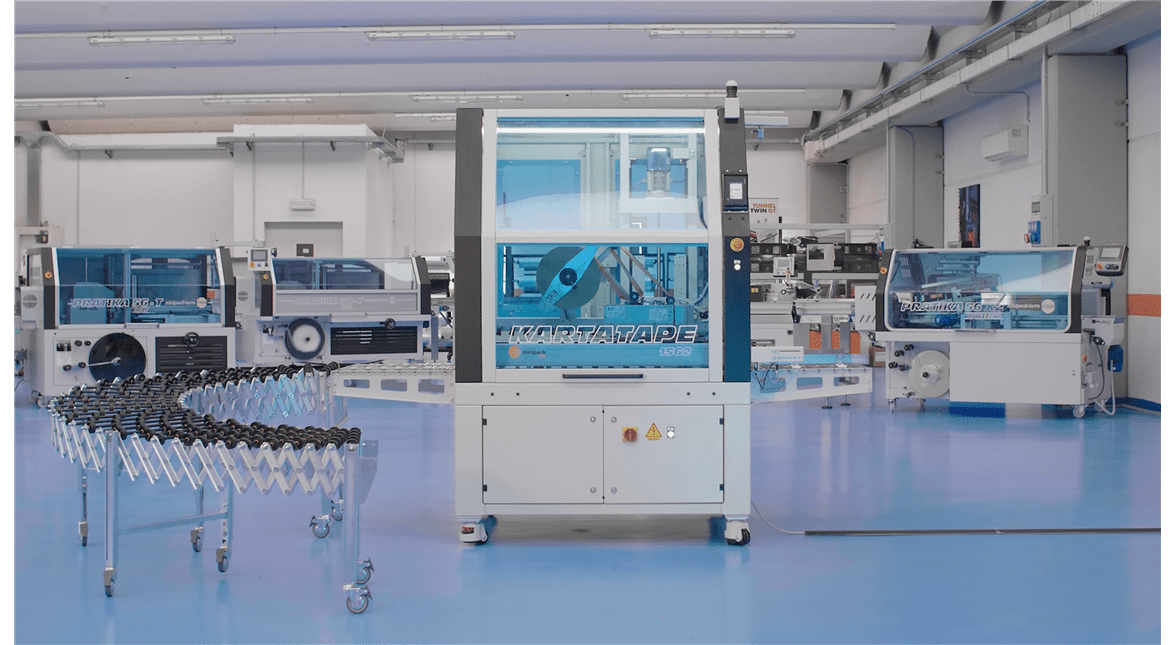
Many manufacturing companies are moving away from manual handling packaging lines and replacing it with automated packaging systems. Tasks such as sorting, filling, sealing and labelling were often completed using traditional packaging processes, with very little machinery and advanced technology available. Today, automated packaging lines work in a much better way to streamline tasks that were originally slower to complete.
Whether it’s completing large scale orders, increasing turnaround times or improving quality control, automated packaging helps lower labour costs significantly through increased efficiency, reliability and less physical work during the manufacturing process. This ultimately leads to improved business operations: with less costs associated when it comes to salaries/wages and fewer employees needed to operate the equipment and machinery onsite.
Increased Productivity
Investing in an automated packaging system will not only help complete your daily tasks faster, it increases scalability and the roll out of products with more precision and speed than manual labour can achieve by itself. Machinery has the capacity to keep things flowing more continuously, delivering fewer errors and processing higher volumes of units per hour, while growing profit margins. By producing more goods for the same cost, businesses are positioning their brands for greater success, overall reach and productivity.
Manual packaging simply can’t achieve the same level of efficiency and streamlined operations that automated packaging can deliver. Instead of worrying about production issues, an automated system offers reliability and a higher level of scalability not achievable with manual handling processes.
Greater Innovation & Technological Advancement
If you’re a company owner, you will know that operating a business means keeping up with modern trends and investing in equipment that helps increase revenue, minimising downtime and reducing costs. With the manufacturing economy changing at a rapid pace, there are fewer workers needed to complete tasks, with a greater focus on fully automated machinery taking over. With robotics, AI controls and smart sensors now features of automated packaging lines, it is fast becoming the way of the future for manufacturers worldwide.
It is the ultimate game changer. It supports comprehensive business processes, adapts to ever changing market demands and helps upscale companies to a level that would not be possible with manual handling operations.
How Minipack Can Help Streamline Your Business
As the original inventor of the hooded shrink-wrapping machine, Minipack is recognised as an industry leader in this field. With over 15,000 machines sold in the Australian market, we are highly regarded for our speciality in helping businesses succeed with premium shrink packaging machines ranging from the most economical unit to the most sophisticated fully automatic units.
We are proud to be at the forefront of shrink-wrapping machine technology. Whether you’re after economical units or fully automatic high-speed units, we have the right shrink- wrapping machine to suit your business requirements. Operating since 1984, we have the expertise, knowledge and manufacturing capacity to handle all your project needs on time and within budget. Call our team today to discuss your manufacturing requirements.
Automated Packaging Line FAQs
An automated packaging line is equipment that collaborates to package items with minimised human intervention. It has a great facility in performing simple tasks of feeding, wrapping, sealing, labelling or palletising, into one integrated workflow.
The main reason is efficiency. Through automated systems that keep moving on an even pace with no break, efficiency rises, and the time to stop falls. The consistency that automation provides, in particular in demand-fluctuating conditions, is something businesses also value.
Automation automates repetitive and time-consuming steps and brings fewer manual hours to the business. That lowers wage costs, reduces the risk of mistakes and enables staff members to transition into positions that provide more value than simple packing.
Yes. Machines follow the same programmed steps every time, which means the results are uniform. This reduces issues like poor sealing, uneven wrapping or mislabelling, helping maintain stronger quality control throughout production.
Companies dealing with medium to high volumes of products are the ones that will benefit mostly from this. Automation is a perfect match for manufacturers, food and drink makers, wholesalers, online fulfilment centres and any industry who are doing production in large batches to use any day.
Most businesses can swiftly see the benefits outweigh the cost in the short term. Fewer labour, less packaging mistakes, less material spoilage and faster production can lead to long-term economic profit.
They often do. Automated machines are engineered to use everything effectively, to apply just the right amount of material to every single product. It reduces surplus film, cardboard or other packaging materials, reducing costs and the environmental impact.
Modern systems are very flexible. Most can be modified for different product sizes or types of packaging, it allows easy switching between product types without loss of performance or precision.
Yes. Automated systems eliminate repetitive lifting, cutting, sealing or bending, leading to reduced strain and injuries. It allows employees to concentrate on monitoring, maintenance and quality control, rather than be engaged in manual tasks.
If your output is low and steady, manual or semi-automated equipment may still be the better fit. Automation becomes cost-effective when production volume grows or when a business expects to scale in the near future.