
- OUR MACHINES
- Manual Shrink Wrapping Machines
- Semi-Automatic Shrink Wrapping Machines
- Fully Automatic Shrink Wrapping Machines
- Fully Automatic Side Seal Machines
- High Speed Fully Automatic Machines
- Shrink Tunnels
- Bundle (Sleeve Wrapper)
- Mailing Systems
- Carton Sealers / Carton Erectors
- Pallet Wrapping
- Vacuum Machines
- Roller Die Cutters
- Skin Machines
- Flow Wrap Machines
- Form Fill Seal Machines
- High Frequency Sealers
- Verticle Form Fill Sealing Machines
- Filling Machines
- Capping Machines
- Doy Pack Machines
- Over wrapping Machines
- Metal Detector and Check Weigher
- Labelling Machines
- Bagging Systems
- Top Seal Machines
- Seal Stretch Machines
- Blister Machines
- Horizontal Wrapping Systems
- Robotic Systems
- In Feed / Out Feed Conveyors
- PACKAGING FILMS
- Polyethylene
- Polyolefin
- BOPP Film
- Polypropylene
- PVC Films
- Stretch Films
- SECOND HAND MACHINES
- Second Hand Machines
When Wrapping Freight and Merchandise by Hand Starts Costing You Money
A carton can look fine on the dock and still arrive as a claim. The tape held. The label was readable. What failed was the band that was supposed to keep a bundle of timber, a stack of cartons, or a run of extrusions from shifting in the truck. Someone tensioned it by feel, the seal slipped, and the load moved somewhere between Campbellfield and the customer’s receiving bay.
That is the quiet cost of hand strapping. It does not show up as a machine downtime code. It shows up as rework, credits, and a supervisor walking the floor asking why the same product keeps arriving loose. A strapping machine is the fix when the job has outgrown a hand tool, not when you simply want a shinier piece of kit on the line.
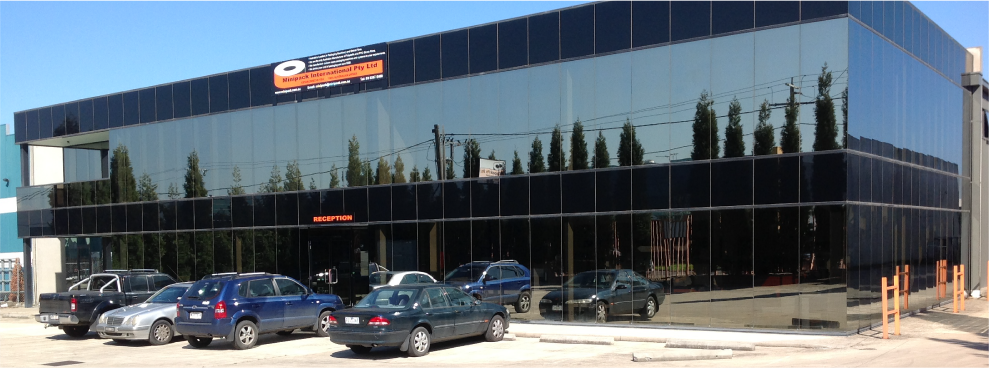
Minipack International supplies packaging machinery from a Melbourne showroom at 39–41 Barry Road, Campbellfield, and builds systems from manual through fully automatic. Banding sits in that range. The right machine depends on what you are holding together, how many units leave the dock each hour, and what the rest of the line is already doing.
What a strapping machine actually does
Strapping, or banding, pulls a strap or film band around a product or a group of products, tensions it, and seals or cuts it so the unit stays one piece in storage and transit. It is not the same job as sealing a carton, shrink wrapping a retail pack, or stretch wrapping a pallet. Those three solve different problems. Mixing them up is how buyers end up with a machine that looks busy and still lets product move.
A carton sealer closes flaps. A shrink wrapper presents and protects a retail unit. A pallet wrapper stabilises a full pallet. A strapping machine holds a bundle, a long product, or a stack so it can be handled as one item before it ever reaches the pallet.
In Australian plants the work usually falls into one of four patterns:
- Bundles of cartons, bottles, or cans that need to stay together for a retailer or a distributor.
- Long product: timber, aluminium extrusion, pipe, conduit, carpet rolls, or furniture components.
- Stacks of flat goods: printed board, panels, or sheet that must not slide.
- Unit loads that need an extra band on top of stretch film because the freight route is rough or the product is top heavy.
If your damage reports mention “bundle split”, “straps loose”, or “product shifted in transit”, you are looking at a banding problem, not a labelling problem.
Why hand tools stop paying their way
A manual tensioner and sealer is still the right tool for low volume, awkward one-off jobs, and sites that strap a handful of bundles a day. The trouble starts when volume climbs and the result has to be repeatable.
Hand banding depends on the person holding the tool. Tension varies between the start of a shift and the end of one. Seals vary between a careful operator and someone trying to clear a backlog before a carrier cutoff. On long product, the operator also has to walk the length, keep the band square, and avoid nicking the goods. That is slow, and it is where shoulders and wrists start to complain.
Run a simple count for a week before you ask for a quote. Note bundles per hour in the busy window, minutes per bundle, and how many come back loose or need a second band on the dock. Multiply loose bundles by the cost of a credit, a reship, or a customer who quietly moves the next order. That number, not a brochure speed rating, tells you whether an automatic strapping machine is due.
A worked example, not a promise: if two people spend 90 minutes a day banding timber packs, and one in twenty packs is rebanded or credited, the labour and the claims usually dwarf the cost of a purpose-built banding line within a year. Your numbers will differ. The method does not.
Arch strappers, hand tools, and horizontal spiral banders
Buyers often search “strapping machine” and picture one thing: an arch that drops over a carton, shoots polypropylene strap, tensions, and heat seals. That machine is common, and it is the right answer for uniform cartons and regular bundles that fit inside a fixed arch.
It is a poor answer for product that is longer than the arch, wider than the arch, or too irregular to sit still while a strap is fired around it. Timber yards, extrusion plants, and anyone shipping rolls or lengths hit that wall quickly. Forcing those jobs through a carton arch means extra handling, or it means the job stays manual.
That is where a horizontal spiral bander earns its keep. The product travels through a rotating ring. The ring lays a band as the conveyor moves, a photocell starts and stops the cycle, and the unit hooks, holds, and cuts. You are not limited to one strap in one plane. You can program several banding patterns for different lengths and pack styles.
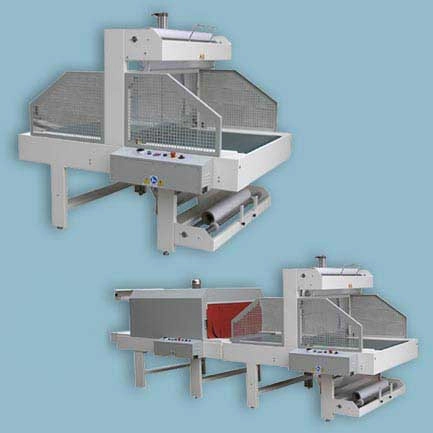
Minipack’s answer in this category is the Minipack Spiral, listed under horizontal wrapping systems. It is a packaging machine built for banding, not a carton arch with a different badge. The published specification is worth reading before you shortlist anything else:
- Wheel driven ring rotation, with rotation speed set through an inverter.
- A spool holder and a mechanically adjustable clutch on the gear roller, so tension can be set rather than guessed.
- A hooking, holding, and cutting unit.
- A photocell that sees the product and starts and stops the wrapping cycle.
- PLC control and a touch screen that manages the cycle and eight banding types.
- Infeed and outfeed band conveyors, with conveyor speed on an inverter and height adjusted manually.
- A vertical pneumatic pressure unit with free rollers on the infeed and outfeed, so the product is held while it is banded.
- Air at 6 bar, about 5 NL/min, and a 220V single phase supply.
The same platform is offered in different models and sizes, from manual through fully automatic. That matters. A site doing short runs of mixed lengths does not need the same infeed as a plant running one section size all day.
Strap, stretch band, or shrink sleeve
Polypropylene strap
PP is the everyday carton and light bundle strap. It is economical, easy to seal with heat or friction, and fine for loads that are not heavy and not stored for long in the sun. It elongates, then relaxes. A band that felt tight on Monday can be slack by the time a container is unpacked. Do not spec PP for heavy, sharp, or long-haul loads and expect it to behave like polyester.
Polyester strap
PET holds tension better and suits heavier bundles and rougher handling. It costs more per metre and needs a machine that can tension and seal it properly. If your freight claims are about straps going slack rather than straps never being applied, PET is often the material conversation, not a faster arch.
Stretch banding and spiral film
A horizontal spiral does not have to behave like a classic strapper. It can lay a stretch band that grips the product, protects edges, and still lets you see what is inside. That is useful for timber, extrusions, and goods that get picked from the bundle in a yard or a store. Film choice sits alongside machine choice. Minipack supplies stretch films and polyethylene films from the same Melbourne operation, so the band and the machine can be trialled together rather than guessed from a data sheet.
When a shrink sleeve is the better band
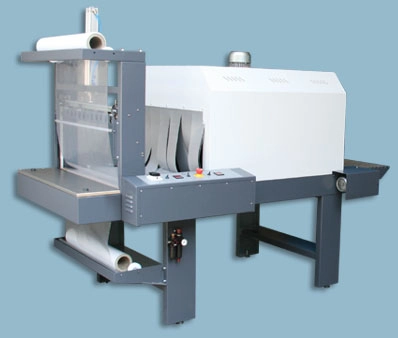
If the goal is a tight retail multipack, a printed look, or a bundle that must not be opened until the shelf, a bundle sleeve wrapper can beat a strap. Strapping is for handling strength and unitising. Shrink bundling is for presentation and tamper evidence. Plenty of plants need both, on different SKUs. Buying one machine to do both jobs badly is a common and expensive shortcut.
Where banding sits on an end of line
A strapping machine that is dropped into a gap with no thought for flow will become a bottleneck with a touch screen. Map the path before you size the ring or the arch.
- Product leaves the process, the saw, the extruder, or the carton sealer.
- It is collated into the bundle size the customer actually ordered. Wrong collation is not a strapping fault, but the strapper gets blamed for it.
- The bundle is presented square, at a repeatable height, and held while the band goes on. On the Spiral that holding is the pneumatic pressure unit. On a manual station it is an operator and a bench. One of those is consistent.
- Banded units move to a pallet, a stillage, or straight onto a truck. If the next step is a pallet, a pallet wrapping machine should be planned as the following station, not as a rival to the strapper.
Infeed and outfeed conveyors are not an optional extra once you are above a few bundles a minute. They set the pitch, keep hands out of the ring, and stop the bander from waiting on someone with a trolley. Carton lines that already run a carton sealer or carton erector should treat banding as the next decision, not a separate project that ignores the sealer’s outfeed height.
Power and air are the unglamorous checks that delay installs. The Spiral’s published supply is 220V single phase and 6 bar air. Confirm what is actually at the proposed location, not what the switchboard drawing said in 2014. Floor space needs the infeed length of your longest product, plus room to clear a jam without blocking the aisle a forklift uses.
How to choose, without buying the wrong arch
Take these to the conversation. A supplier who will not work through them is selling a catalogue code, not a line.
- Product range. Minimum and maximum length, width, and height. Note the awkward SKU, not the average one. The awkward one is what breaks a fixed arch.
- Bundle recipe. How many pieces, whether they are nested, and whether the band must sit in set positions so a forklift or a sling can still get under the pack.
- Rate. Bundles per hour at peak, not the yearly average. Peak is Thursday afternoon before the carrier, not a quiet Tuesday.
- Changeovers. If you run eight pack styles, you want those styles in the controller, not in a folder of handwritten settings. Eight banding types on a touch screen is a practical number for mixed timber or extrusion work. Use them.
- Tension and damage. Soft product, painted extrusion, and printed board mark easily. Adjustable clutch tension and a pressure unit that holds without crushing are the features that protect margin.
- Seal or cut quality. A tail that catches on the next pack, or a cut that leaves a sharp end, becomes a safety issue and a damage issue. Watch a cycle on your product, not on a demo block.
- Integration. Photocell start and stop, inverter speeds on conveyor and ring, and a PLC you can actually get support for in Australia. Pretty screens that nobody local can back up become expensive the first time a sensor fails on a Friday.
- Operator reality. Who runs it after the fitter leaves? If the answer is a casual on the afternoon shift, the screen and the guarding have to be obvious. Training time belongs in the project cost.
Ask to see the machine on product close to yours. Minipack’s showroom is in Campbellfield, and the practical next step for most buyers is a conversation on 1300 853 111 or (03) 9357 8400, or a note through the contact page, with photos of the current pack and a rough bundles-per-hour figure.
A buying checklist you can hand to procurement
Procurement will ask for a payback. Give them inputs they can audit.
- Current minutes per bundle, and bundles per day.
- People on the banding station at peak.
- Claims or rebands per month, with an average cost.
- Strap or film used per bundle today, and the waste from bad seals and recuts.
- The SKUs that cannot go through a standard carton arch.
- Available power, air, and floor length at the proposed spot.
- Whether pallet wrapping, carton sealing, or sleeve wrapping already sits upstream or downstream.
The commercial takeaway is simple. If those numbers show repeatable volume and repeatable damage, stop funding the problem with overtime and credits. Spec a strapping machine around the product you actually ship. For long, awkward, or mixed bundles, that spec is a horizontal spiral bander such as the Minipack Spiral, with film trialled at the same time and conveyors planned so the ring is never waiting on a trolley. For uniform cartons that only need flaps closed, you may not need a strapper at all. You may need a better sealer. Getting that distinction right is what turns a machinery enquiry into a line that pays for itself.
Hand banding hides its cost in loose packs, tired operators, and freight claims that never get coded back to the dock. A strapping machine pays when tension, pattern, and speed stop depending on who is holding the tool. Choose the style for the product: an arch for regular cartons and bundles that fit it, a horizontal spiral for lengths and irregular packs, and a shrink sleeve when the job is really a retail multipack. Then connect it to the sealer, the conveyor, and the pallet wrapper so banding is a step in the line, not a bench in the corner.
Minipack International has spent decades supplying packaging machines and film to Australian manufacturers and warehouses, from manual tools through fully automatic systems. If loose bundles are already on your claims report, bring the product dimensions and the hourly rate to Campbellfield, or call 1300 853 111, and have the Spiral and the wider end of line range specified against the work you are actually doing.
Questions we get about frieght wrapping and strapping
What is a strapping machine used for?
It tensions and seals a strap or band around a product or a bundle so the unit stays together in storage and transit. Typical jobs include cartons, bottles, timber, extrusions, pipe, panels, and other goods that shift if they are only taped or loosely stacked.
Is a strapping machine the same as a pallet wrapper?
No. A strapping or banding machine unitises a product or a small bundle. A pallet wrapper applies stretch film around a full pallet. Many sites need both: band the pack, then wrap the pallet. Minipack supplies pallet wrapping machines as a separate category for that second step.
When should we stop using a hand strapper?
When volume makes tension inconsistent, when operators are walking long product to apply each band, or when loose straps are showing up as credits. Track bundles per hour, minutes per bundle, and rebands for a week. If peak volume needs more than one person and claims are regular, an automatic or semi-automatic machine is usually the cheaper option.
What is the difference between an arch strapper and a horizontal spiral bander?
An arch fires a strap around a product that fits inside a fixed frame. It suits uniform cartons and compact bundles. A horizontal spiral, such as the Minipack Spiral, passes longer or irregular product through a rotating ring and can run several banding patterns. If your product is longer than a standard arch, start with the spiral, not the arch.
Should we use polypropylene or polyester strap?
PP is economical for light, short-haul bundles. It relaxes over time. PET holds tension better on heavier packs and rougher routes, at a higher material cost. Stretch banding on a spiral wrapper is a third option when you also want edge protection and a visible pack. Trial the material on your product before you lock the spec.
Can a strapping machine damage soft or painted product?
Yes, if tension is guessed and the product is not held square. Look for adjustable tension, a pressure unit that holds without crushing, and a cycle you can watch on your own goods. The Spiral’s adjustable clutch and pneumatic pressure unit are there for that reason. Soft board and painted extrusion should be trialled, not assumed.
How fast is an automatic strapping machine?
Speed depends on product length, how many bands you apply, and how quickly the upstream process presents a square bundle. A photocell started cycle with inverter controlled conveyor and ring speed will outrun hand banding on long product, but only if collation and infeed are not the bottleneck. Quote the peak bundles per hour you need, and ask for a cycle on a similar length.
Where does banding sit relative to carton sealing and shrink wrapping?
Seal the carton first if the unit is a case. Band it if several cases, lengths, or pieces must travel as one. Shrink wrap or sleeve wrap if the customer needs a retail multipack or tamper evidence. These are different machines. Minipack can specify carton sealers, sleeve wrappers, and horizontal banders so you are not asking one station to do three jobs.
What should we send Minipack before a quote?
Product minimum and maximum sizes, photos of the current pack, bundles per hour at peak, the strap or film you use now, and what power and air are at the location. A short video of the hand process is often more useful than a formal specification. Call 1300 853 111 or (03) 9357 8400, or use the contact page.
Do you supply film as well as the machine?
Yes. Stretch film and polyethylene film are part of the same supply, so banding material and machine settings can be matched. Buying the cheapest strap or film after the machine is installed is a common way to undo a good tension setup.